
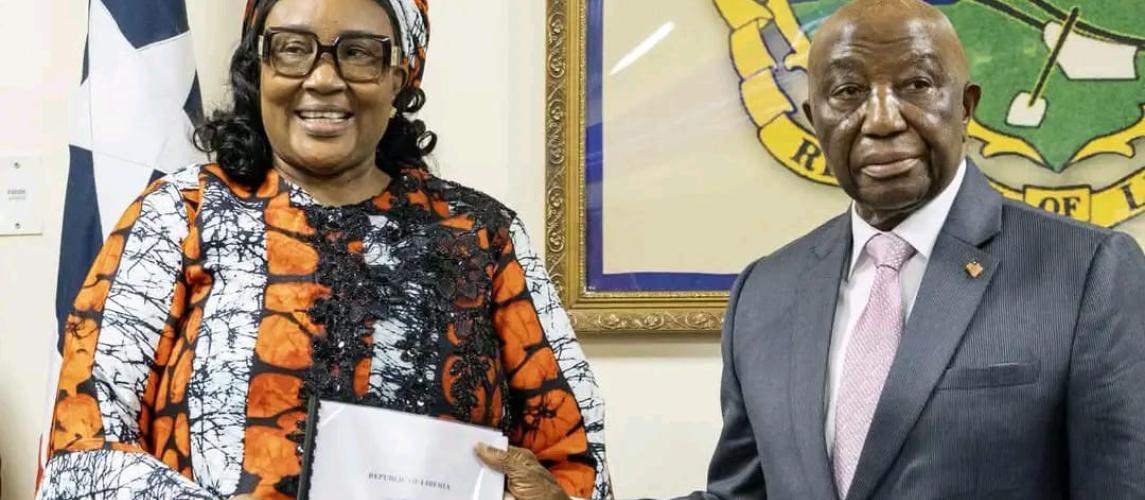
President Boakai Receives Proposed National Health Insurance Bill Seeking the Establishment Liberia Health Equity Fund
The initiative, aimed at establishing a sustainable national health insurance scheme for Liberia through a transformative reform, will strengthen health equity, improve access to care, and build a more resilient and sustainable health system for all Liberians and legal residents while protecting households from catastrophic out-of-pocket medical expenses.
The Bill aligns with the Sanitation and Health Pillar of the Government's ARREST Agenda for Inclusive Development, which seeks to ensure access to quality healthcare services, strengthen public health systems, improve sanitation and hygiene, and expand access to clean water and other essential health services for all Liberians.
Receiving the proposed Liberia Health Equity Fund (LHEF) Bill and the framework for Health Equity Authority of Liberia (HEAL) from the Ministry of Health, President Boakai described the initiative as a significant step toward ensuring that every Liberian has access to affordable and quality healthcare, pointing out that "the health of the people is the responsibility of the Government."
The President asserted that a government dedicated to serving its citizens must ensure access to quality healthcare, quality education, and other essential public services. "If we give the people quality education and full access to healthcare, that country will be great," he stated, adding that Liberia's transformation depends on investing in its human capital and making the best use of its resources.
The Liberian Leader intimated that the health of the nation is a collective responsibility where progress depends on the efforts of all citizens. He called for an aggressive public awareness campaign to educate citizens on the benefits of health insurance, noting that widespread understanding and participation would be critical to the success of the program.
Drawing on examples from other countries, he said Liberia can learn from successful models elsewhere while tailoring them to the country's unique circumstances.
The Liberian Leader further explained that health insurance systems work by pooling contributions so that resources are available when people require medical care
He stressed that the nation does not need to reinvent the wheel but should embrace ideas that have proven effective in improving healthcare delivery and protecting citizens from catastrophic medical expenses.
The President concluded by assuring that his Administration remains fully committed to supporting the initiative and working with health professionals, policymakers, and development partners to ensure its successful implementation. He commended those involved in drafting the bill and encouraged them to continue engaging communities and explaining how the system will benefit ordinary Liberians.
According to Ministry of health team on the proposed Liberia Health Equity Fund for Universal Health Coverage, the bill seeks to identify several statutory contributions and levy streams to finance the national health insurance scheme. These include contributions from the formal sector, with 0.5% to 1.0% of salaries paid through NASSCORP and shared by employers and employees under HEAL regulations; 1% to 3% of Value Added Tax (VAT) collections, with the exact percentage to be determined; a one-cent surcharge on all mobile money transactions conducted in Liberia; and mandatory contributions from Class A and B mining concession companies in amounts to be prescribed by regulation.
Additional funding sources include periodic lump-sum contributions from the informal sector through unions, associations, and other groups, collected and remitted by the Liberia Revenue Authority (LRA); 10% of total excise tax collections; 5% of revenues generated from environmental pollution-related activities and other relevant taxes imposed on manufacturers and distributors; and levies on companies providing health and health-related insurance services.
Together, these revenue streams are intended to create a sustainable funding mechanism to support equitable access to healthcare and advance universal health coverage across Liberia.
